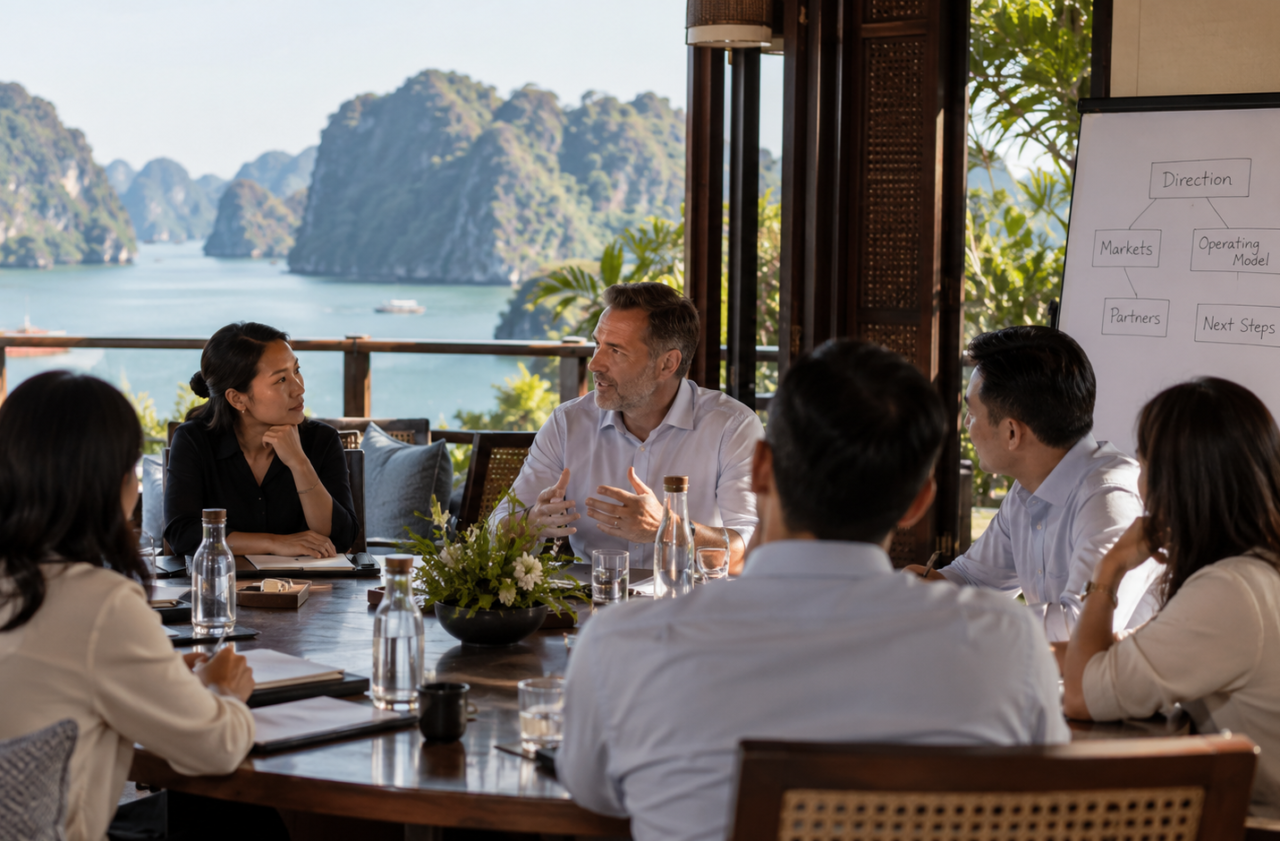
An executive offsite brings together business decisions, facilitated discussion, participant experience and live operations. Those responsibilities can sit with different people. Making them explicit early gives everyone a workable brief.
Planning an executive offsite in Vietnam usually brings together at least four forms of responsibility. The leadership sponsor owns the business purpose and the decisions the group has come together to make. A facilitator, if one is appointed, designs and leads the working sessions. The local event partner turns the agreed intent into a workable programme and manages delivery around those sessions. The venue delivers the space and services covered by its contract.
One organisation may combine two of these roles, while another may appoint a separate specialist for each. The important question is whether everyone knows which decisions they can make, which matters require approval and what needs to happen when one part of the programme changes.
This clarity is especially useful for a Chief of Staff or HR Director coordinating an international group from outside Vietnam. A supplier may describe its service as end to end, yet that phrase does not establish who controls leadership content, who facilitates sensitive discussions or who can approve a live change that affects cost, timing or the participant experience.
Begin With the Decisions Only the Organisation Can Make
The leadership sponsor does not need to plan the meeting room, transport or dinner service. It does need to state why the group is meeting, which questions need attention, who should take part and where decision authority sits. Leadership also retains responsibility for what is communicated afterwards and how agreed actions continue once people return to their markets and functions.
The Chief of Staff or HR lead may translate those decisions into a brief and coordinate the people involved. That coordination becomes much easier when approval authority is visible. If the CEO, board or regional lead must decide a matter, the facilitator and event partner should know when that approval is needed rather than discovering it during the live programme.
Facilitation Is a Separate Responsibility
An agenda, a run of show and a facilitation plan are related documents, but they do different jobs. The agenda sets out what the group will address. The run of show coordinates the live programme, including timings, cues and operational dependencies. The facilitation plan determines how a discussion will be led, how different views will be surfaced and how conclusions will be captured.
The brief should therefore name who will facilitate the working sessions. It may be the CEO, an internal strategy lead or an external specialist. Where a facilitator is already appointed, the local event partner should work with that person on room configuration, timing, materials, privacy, technical requirements and the practical transitions around each session.
With that line in place, the facilitator can concentrate on the conversation in the room. The event partner can build and operate the environment around it without being assumed to hold authority over the organisation’s leadership content.
The Local Event Partner Connects the Parts That Affect the Live Programme
A local partner may manage the venue, accommodation, transport, conference production, participant information, guest care, hospitality, local experiences, media and live operations. The exact scope depends on what the client has already arranged and what the partner has been appointed to lead.
The partner still needs enough understanding of the business purpose to make sound decisions. A formal board discussion, an annual partner retreat and a regional planning session may involve a similar number of people, but they do not require the same room, rhythm, privacy or hospitality.
The work becomes most visible at the points where one decision affects several others. A later flight can change the welcome evening. A different session format can alter the room set-up and technical plan. Filming can raise questions about confidentiality. Extending a discussion can affect transport, dining, venue hours and the needs of participants who were expecting a break. The local partner should make those consequences clear, present workable options and coordinate the response that has been approved.
The Venue Delivers Its Services, Not Automatically the Whole Offsite
A hotel or conference venue knows its building, meeting rooms, accommodation, catering, house equipment and service hours. Those responsibilities are substantial. They do not automatically include airport movements, participant communications, off-site dining, external production, local experiences, media or the decision chain across the wider programme.
The client may contract the venue directly or place venue coordination within the local partner’s scope. Either arrangement can work. If the contract sits with the client, the partner still needs direct access to the relevant venue team and enough authority to coordinate the agreed programme. Otherwise, ordinary operating questions return to the client simply because no one else has been authorised to resolve them.
A Practical Responsibility Map
| AREA | PRIMARY RESPONSIBILITY | WHAT MUST BE CLEAR |
|---|---|---|
| Business purpose and decisions | Leadership sponsor | What the group needs to address, who can decide and what remains outside the offsite. |
| Working agenda | Client leadership or Chief of Staff | Which topics and participants are confirmed, what is still developing and who approves the final version. |
| Session design and facilitation | Named internal or external facilitator | How discussions will be led, decisions captured and sensitive information handled. |
| Programme around the sessions | Local event partner | How the working agenda connects with arrivals, breaks, hospitality, movement, local experiences and departure. |
| Venue, production and suppliers | Local event partner within the appointed scope | Who contracts each supplier, who coordinates them and which changes require client approval. |
| Participant information | Client and local event partner | The client provides accurate, appropriately shared information; the partner manages the agreed logistics and communications. |
| Decisions and follow-through | Leadership | What was decided, who acts next and how progress will be reviewed after the offsite. |
The Handoffs Matter Most When the Programme Changes
Consider a leadership session scheduled to finish at 4.00 pm. At 3.40 pm, the group reaches a discussion that needs another 45 minutes. The facilitator or leadership sponsor decides whether the conversation should continue. The local partner explains what that choice does to the break, transport, dinner timing, staffing and venue hours, then coordinates the agreed change. The venue confirms what can still be delivered within its operating constraints.
Each party contributes to the same decision without taking over another party’s authority. When those lines have been agreed in advance, a change can be handled quickly. When they have not, a straightforward adjustment can turn into a sequence of calls while the programme is already moving.
This is why an end-to-end label is less useful than a proposal that states what the partner will lead, coordinate, supply and escalate. The same clarity also allows buyers to compare proposals on a common basis rather than comparing total prices attached to different responsibilities.
What a Useful Brief Needs to Make Clear
A client does not need a finished agenda before speaking with a local partner. A useful first brief can state why the group is coming together, who will attend, the dates and location constraints, what has already been decided and what remains in development.
It should also identify any facilitator, regional agency, venue or supplier already appointed. The local partner can then respond to the actual gap: a complete programme around an established leadership agenda, a defined delivery scope within a regional structure, or earlier support in shaping how the experience should work in Vietnam.
This prevents the proposal from duplicating work that already exists. It also makes omissions easier to see before the organisation appoints several parties on the assumption that someone else is joining their work together.
How This Looked in Practice
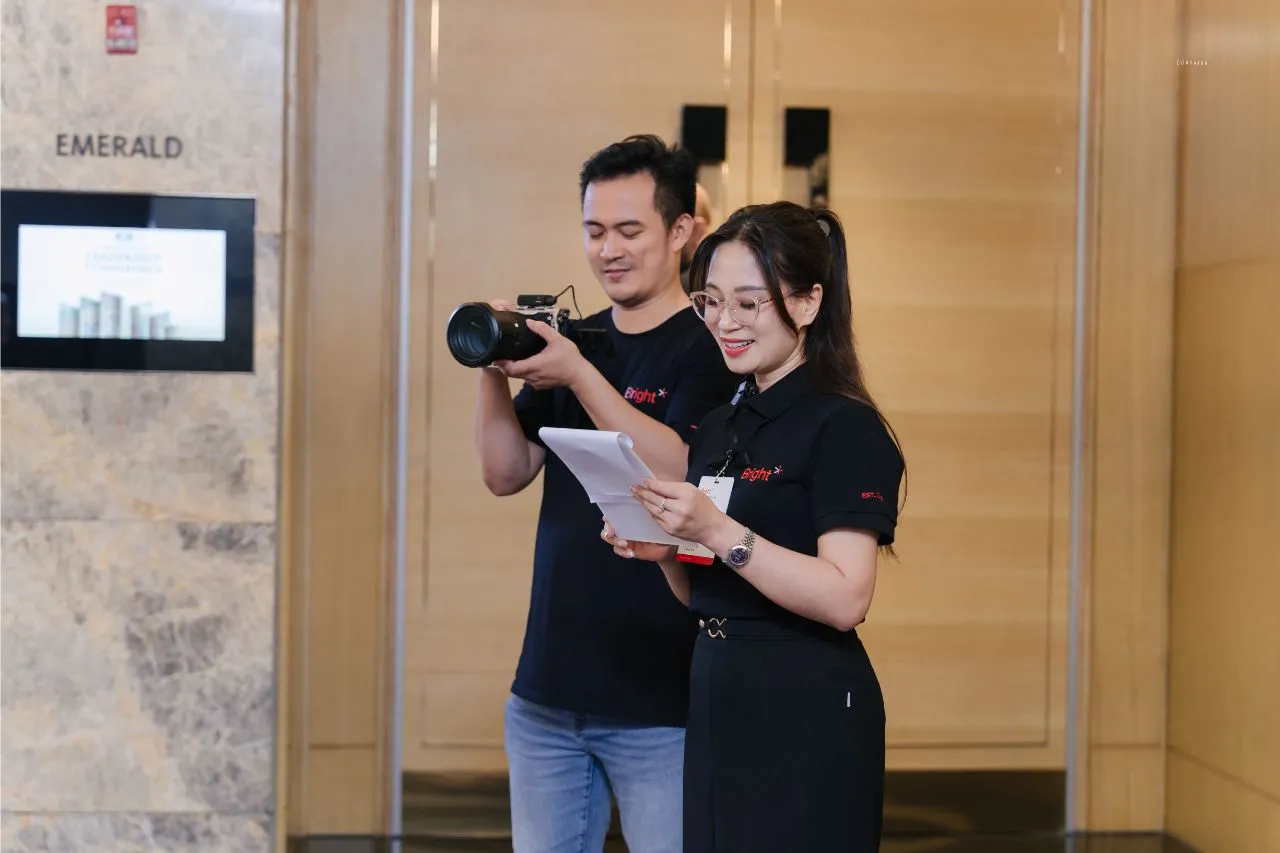
For the KHI Partners Retreat 2026, KHI’s leadership retained ownership of the conference agenda. Bright managed the wider six-day programme for 40 international partners and leaders across Hanoi and Ha Long Bay. The work included conference delivery, accommodation, transport, hospitality, participant care, local experiences, photography and film.
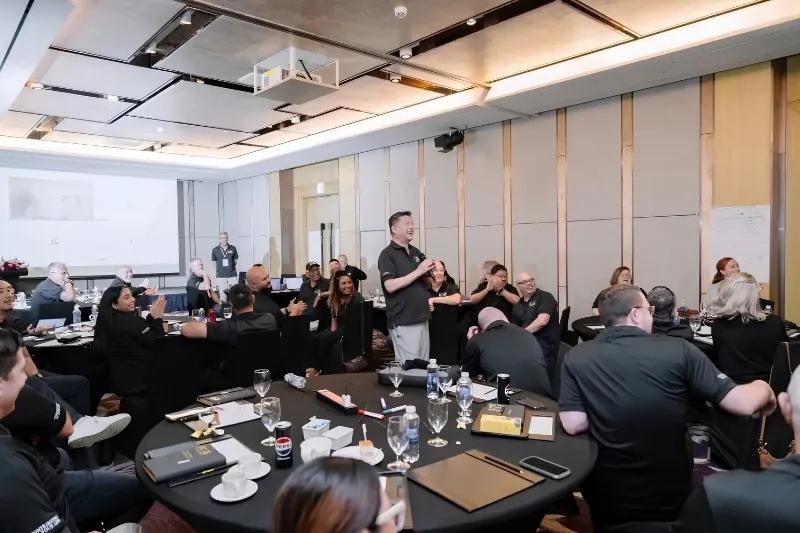
KHI did not need to transfer its leadership content to Bright, and its leaders did not need to become the operating team for the retreat. KHI led the conference content. Bright ran the programme around it.
Read the KHI Partners Retreat 2026 case study
Common Questions
Does an event partner also facilitate the leadership sessions?
Only when facilitation is explicitly included and assigned to a suitably qualified person. In many offsites, the CEO, an internal leader or an external facilitator owns the working sessions, while the event partner manages the environment and delivery around them.
Can an existing facilitator or regional agency work with a local partner in Vietnam?
Yes. The brief should state which work is already approved, who can change it and what the local partner is expected to deliver. The parties also need a direct route for resolving decisions that affect timing, venue, production or participants.
What should a Chief of Staff retain after appointing a local event partner?
The organisation should retain the business purpose, internal stakeholder decisions, authority over leadership content and responsibility for follow-through. Venue coordination, participant logistics, hospitality, production and other agreed workstreams can be transferred to the local partner.
Who approves changes during the live programme?
That authority should be agreed before the offsite. Leadership or the facilitator decides changes to the substance of the working sessions. The local event partner manages delivery within the approved scope and escalates changes that materially affect cost, timing, safety or the agreed participant experience.
Planning an Executive Offsite in Vietnam?
You can come to Bright with a complete agenda, an appointed facilitator or an early business situation. Tell us what has already been decided, who else is involved and what you need a local team to take over. Bright will define its role around the work that is already in place.
Explore Bright Executive Experiences
Read: Executive Offsites in Vietnam – Creating the Conditions for Leadership Alignment